


How to Fix a Jammed Door: 7 Steps That Work

Table of Contents
Diagnose the Jam Before You Touch Anything
Visual Diagnostic Checklist
Decision Tree: Hinge, Latch, or Frame?
Seasonal and Humidity Clues
Tools for Fixing Jammed Doors
How to Adjust Door Hinges
Tightening Loose Hinge Screws
Shimming and Bending Hinges
Door Latch Repair: Fixing a Stuck Latch or Strike Plate
Lubricating Door Hardware and Clearing Paint Buildup
When Humidity, Foundation Settling, or Lockouts Mean You Need a Pro
How Foundation Settling Twists a Door Frame
Emergency Lockout vs. Jammed Door
When to Stop and Call a Pro
Frequently Asked Questions
Last Updated: September 21, 2026
Diagnose the Jam Before You Touch Anything
A jammed door is a door that no longer moves freely within its frame, usually because the latch bolt, hinge, or door edge is binding against the jamb. Knowing how to fix jammed door problems starts with finding the cause, not forcing the handle. Most jams trace back to one of four things: loose hinges, a misaligned strike plate, swollen wood, or paint buildup. Below, we break down a simple diagnostic process so you fix the right problem the first time.
A common mistake is grabbing a screwdriver and tightening everything before you know what is actually stuck. That approach often makes the door worse.
Visual Diagnostic Checklist
Run this checklist before you touch a single screw:
Open the door and watch where the edge rubs the frame
Check the gap between the door and the jamb at the top, middle, and bottom
Look for shiny wear marks on the strike plate or latch bolt
Test the hinge screws with a screwdriver to see if any spin freely
Look for cracked or peeling paint along the door edge
Push the door gently to feel where it binds
If the door rubs at the top corner, the hinges are usually the culprit. If it sticks near the latch, the strike plate is the likely cause.
Decision Tree: Hinge, Latch, or Frame?
Use this table to move from symptom to likely cause before you pick up a tool. It is the fastest way to avoid fixing the wrong part.
Symptom | Likely Cause | First Test |
Rubs at top corner, sags when open | Loose or worn top hinge | Tighten hinge screws; if they spin, the hole is stripped |
Sticks only near the latch, door closes with a push | Misaligned strike plate | Mark latch bolt position on the plate and compare |
Rubs along the full length of the edge | Swollen wood or paint buildup | Check humidity and look for a paint ridge |
Rubs at one corner year-round, cracks near casing | Frame out of plumb from settling | Check for cracks above the door and gaps that change |
Door rattles when closed, latch feels loose | Strike plate screw holes enlarged | Try a longer screw; if it will not hold, the jamb is damaged |
Handle turns but latch will not retract | Broken latch mechanism or worn spindle | Remove the knob and inspect the latch |
Work down the table until one row matches. If two rows match, fix the mechanical issue first, hinges and strike plates are cheaper and faster to correct than wood or framing.
Seasonal and Humidity Clues
Wood doors swell in humid months and shrink in dry ones. This seasonal movement is one of the most overlooked causes of a jammed door, and it explains why a door that worked fine in winter suddenly sticks in summer.
If the jam appears only in certain seasons, you are likely dealing with wood expansion, not a hardware failure. A dehumidifier or a light sanding of the door edge often solves it. If the jam is year-round, the problem is structural or mechanical.
A simple test: press a straightedge or a level against the door edge and the jamb.
Pro Tip Photograph the gap at the top, middle, and bottom of the door before you start. When you finish, compare the photos. If the gap has not changed, you fixed the wrong thing.
Tools for Fixing Jammed Doors
The right tools for fixing jammed doors are basic and inexpensive. You probably already own most of them.
SheetMetalSamurai
Screwdriver (Phillips and flathead)
Rubber mallet for gentle adjustments
Silicone spray or a dry lubricant
Wood shims for hinge adjustments
Utility knife for cutting paint buildup
Sandpaper (fine grit) for wood swelling
Pencil for marking alignment
Pro Tip Before you buy anything, check the hinge screws first. A loose top hinge accounts for a surprising share of jams, and tightening it takes under two minutes.
How to Adjust Door Hinges
Adjusting door hinges is the fix for most doors that rub at the top or drag along the frame. Start by tightening every hinge screw with a screwdriver. If a screw spins without gripping, the hole is stripped and needs a longer screw or a wooden matchstick as filler.

Tightening Loose Hinge Screws
Work from the top hinge down. The top hinge carries the most weight, so it loosens first.
Hold the door steady and tighten each screw clockwise.
Replace any screw that will not grip with a longer one.
Close the door and check the gap at the top.
If the door still sags, move to shimming.
Shimming and Bending Hinges
A shim behind the hinge pushes the door away from the frame. Cut a small piece of cardboard or use a wood shim, loosen the hinge, and slide it behind the leaf.
Door Latch Repair: Fixing a Stuck Latch or Strike Plate
Door latch repair focuses on the strike plate, the metal piece on the jamb that the latch bolt slides into. If the latch catches but the door will not close, the strike plate is misaligned.
Here is the fix:
Mark the latch bolt position on the strike plate with a pencil.
Remove the strike plate with a screwdriver.
File the opening slightly larger with a metal file, or move the plate up or down.
Reinstall and test the door.
Watch Out Do not file the strike plate opening wider than needed. A loose strike plate lets the door rattle and weakens the lock's security.
Lubricating Door Hardware and Clearing Paint Buildup
Lubricating door hardware and clearing paint buildup solves the two most common friction problems. Paint buildup along the door edge is a frequent cause of jams, especially in older homes where the door has been painted several times.
Spray the latch bolt and work it back and forth
Lubricate each hinge pin
Wipe the strike plate clean
Test the door swing
When Humidity, Foundation Settling, or Lockouts Mean You Need a Pro
Some jams point to bigger problems. Humidity and seasonal expansion you can often manage yourself. Foundation settling is different.
How Foundation Settling Twists a Door Frame
When a foundation shifts, the door frame twists out of plumb and level. No amount of hinge adjustment fixes a frame that has moved. Signs include cracks above the door casing, a door that rubs at one corner year-round, and gaps that change on their own.
Emergency Lockout vs. Jammed Door
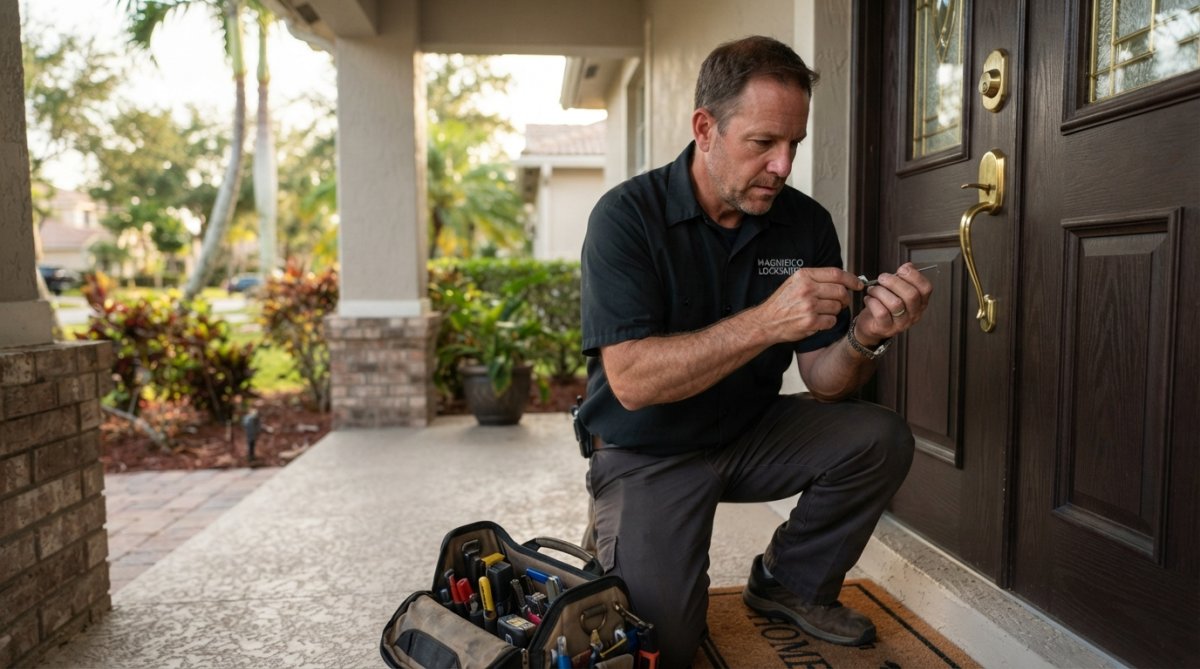
A stuck door and a locked door are different problems, and mixing them up is how homeowners damage frames and locks. If the door is locked and you are outside, the correct approach is non-destructive entry: try every key you own, check for a second door or window, and call a licensed locksmith who can pick or bypass the lock without drilling.
When to Stop and Call a Pro
Use this table to decide whether the job is still a DIY fix or has crossed into professional territory.
Problem | DIY Fix | When to Call a Pro |
Loose hinge screws | Tighten or replace screws | Screws will not hold |
Stuck latch | Adjust strike plate | Latch mechanism is broken |
Paint buildup | Score and sand | Frame is cracked |
Seasonal swelling | Sand edge, control humidity | Jam is year-round |
Foundation settling | None | Frame is out of plumb |
Locked out, door also jammed | Do not force | Call a licensed locksmith for non-destructive entry |
Key Takeaway If a door jams at the same corner all year and you see cracks near the casing, stop adjusting hinges. That is a frame problem, and it needs a professional eye. If you are locked out on top of a jam, call for non-destructive entry instead of forcing the door.
Frequently Asked Questions
How do I know if my jammed door is caused by humidity or a hardware failure?
Check the timing and the symptoms. If the door sticks only during certain months and swells near the bottom or edges, humidity and wood expansion are likely the cause. If the door suddenly jams, feels gritty when you turn the knob, or the latch bolt won't retract, the hardware has failed. A visual diagnostic checklist helps: look for paint buildup, loose hinge screws, and misaligned strike plates before assuming the worst.
Is it safe to force a jammed door open?
No. Forcing a jammed door can crack the door jamb, bend the hinges, or damage the latch bolt and strike plate. If the door is stuck shut and you need to get in, try lifting the knob slightly while pushing, or remove the hinge pins on the accessible side. When in doubt, call a licensed locksmith. A professional can open the door without breaking the frame or lock.
When should I call a professional locksmith for a jammed door?
Call a locksmith if the door won't open after basic troubleshooting, if the lock mechanism is broken, or if you're locked out during an emergency. Also call a pro if you notice foundation settling cracks near the door frame, if the door has antique hardware you don't want to damage, or if multiple doors in your home are sticking. A licensed locksmith can diagnose structural issues and repair the door without causing further damage.
What tools do I need for fixing jammed doors?
You'll need a screwdriver (Phillips and flathead), a rubber mallet, a putty knife, silicone spray lubricant, and replacement hinge screws. A small level helps check door alignment, and a wood shim can correct minor frame issues. For paint buildup, a utility knife and sandpaper work well. Keep these tools for fixing jammed doors on hand so you can address sticking, binding, and latch problems before they worsen.
A jammed door is frustrating, but it rarely means a full replacement. Most fixes take under an hour with basic tools. When the cause is structural, or when you are locked out and the door will not budge, calling a pro saves you from expensive damage. Magnifico Locksmith is family-owned, licensed, bonded, and insured, and has served Broward and South Palm Beach since 1997 with free estimates and emergency service. Get started with Magnifico Locksmith and get your door moving freely again.
CALL US NOW
Comments