


Preventing Home Lockouts: Tips for 2026

Table of Contents
Why Home Lockouts Happen and How to Stop Them
Smart Lock Installation Benefits for Lockout Prevention
Troubleshooting Smart Lock Battery Failure
Digital Key Management Apps and Remote Access
Your Residential Lock Maintenance Checklist
Emergency Locksmith Services Cost and What to Expect
Building Daily Habits for Key Awareness
Cost-Benefit Analysis of Lockout Prevention
Conclusion
Frequently Asked Questions
Last Updated: September 18, 2026
Why Home Lockouts Happen and How to Stop Them
Preventing home lockouts tips 2026 starts with understanding one uncomfortable truth: nearly every lockout traces back to a predictable moment of distraction. A slammed door while carrying groceries. A deadbolt engaged out of habit while stepping out to grab the mail. A spare key that vanished months ago and was never replaced.
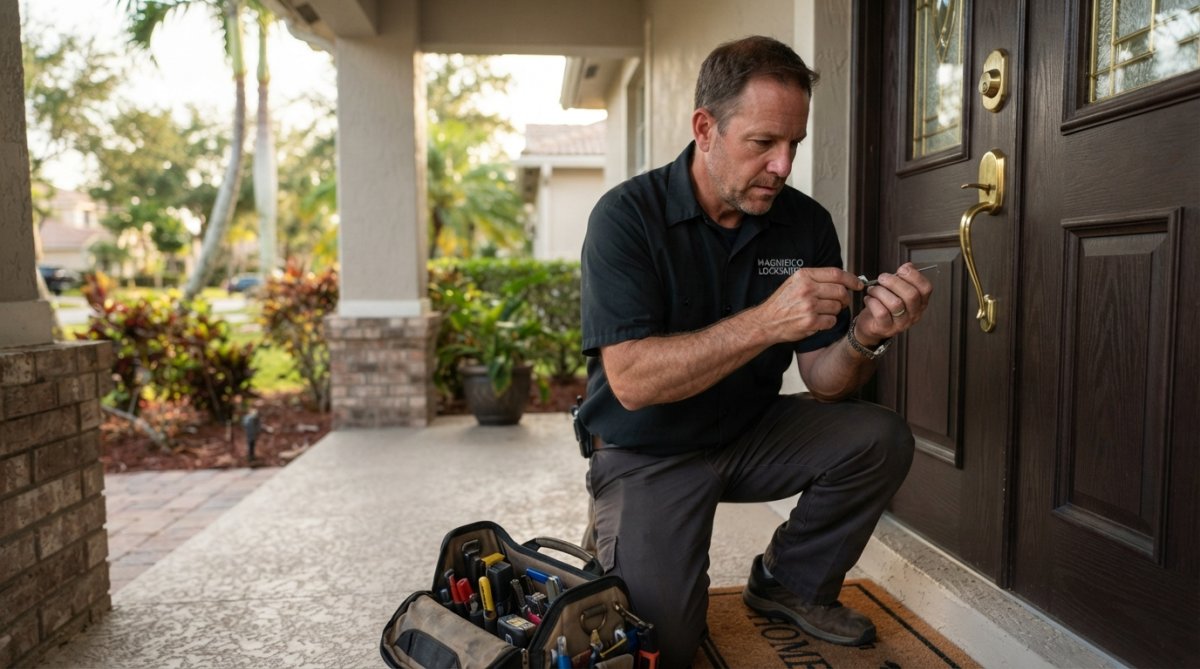
At Magnifico Locksmith, we respond to residential lockout calls year-round, and the patterns rarely change. The door hardware almost never fails. The human routine does.
Most lockouts fall into four categories:
Momentary distraction, door closes behind you while your hands are full
Key misplacement, the spare key is lost, lent out, or never returned
Mechanical failure, a worn lock cylinder or deadbolt jams mid-turn
Access gaps, no backup entry method exists for family members or guests
The good news: each of these has a practical fix, and most cost nothing to implement.
Smart Lock Installation Benefits for Lockout Prevention
Smart lock installation benefits begin with one feature: eliminating the physical key entirely. A keypad entry or biometric access lock lets you enter with a code, a fingerprint, or your phone, so there's no key to forget, lose, or leave inside.

Other practical gains:
Remote access, unlock the door for a delivery or a locked-out family member from anywhere
Audit trails, most apps log every entry, which matters for rentals and shared homes
Auto-lock, the deadbolt re-engages on a timer, closing the gap left by forgotten locks
Troubleshooting Smart Lock Battery Failure
Smart lock battery failure is the most common reason a keyless entry system locks you out. The lock doesn't warn you loudly enough until the battery is nearly dead, and then it simply stops responding.
Here's the practical fix:
Replace batteries on a schedule, not when the low-battery alert appears. Most locks use four AA batteries; swap them every 6-9 months regardless.
Keep the mechanical key override accessible, nearly every smart deadbolt ships with one. Store it somewhere other than inside the house.
Use a 9-volt jump if your lock supports it. Many models accept a 9-volt battery held to external terminals for one emergency entry.
Check the app's battery percentage monthly if remote access matters to you.
Pro Tip Set a recurring phone reminder for battery swaps tied to daylight saving time changes. It's the easiest twice-a-year anchor most people already remember.
Digital Key Management Apps and Remote Access
Digital key management apps turn your phone into a control panel for every entry point in the home. Instead of hiding a spare key under a rock, you send a time-limited digital key to a trusted contact. That is the pitch. The reality in 2026 is more nuanced, and the differences between apps matter more than the feature checklists suggest.
What these apps actually do well
Grant access for a specific window (a two-hour dog walk, a weekend guest, a contractor's service call)
Revoke access instantly, no rekeying required, no awkward conversation about returning a key
Show a timestamped log of who entered and when, which is useful for rentals, shared homes, and aging-parent check-ins
Manage multiple doors and multiple properties from one dashboard
Where the trade-offs live
The convenience comes with dependencies most marketing pages skip:
Cloud dependency. Most consumer apps route access through the manufacturer's servers. If the vendor has an outage, your remote unlock may not work even though the lock itself is fine. Look for locks that support local control over Bluetooth or Thread as a fallback.
Account security is the new spare key. A compromised email account can mean a compromised front door. Use a unique password, enable two-factor authentication on the lock app itself, and audit which email address is tied to the account.
Guest access that never expires. Temporary codes are only temporary if someone remembers to revoke them. Set calendar reminders or use apps that auto-expire codes by default.
Interoperability. As of 2026, Matter-over-Thread support has become the baseline for cross-platform compatibility. A lock that only works with one ecosystem locks you into that vendor's app, hub, and update cycle.
A practical setup for a typical household
Primary entry: a keypad or biometric smart deadbolt with a mechanical key override
Backup entry: a physical key stored off-site with a trusted contact, not in a lockbox on the porch
Guest access: time-limited digital codes, never a permanent code shared by text
Audit routine: review the entry log monthly and prune any codes you no longer recognize
Key Takeaway Digital keys are only as secure as the account that controls them. Treat your lock app the way you treat your bank app: unique password, two-factor authentication, and a monthly review of who still has access.
Your Residential Lock Maintenance Checklist
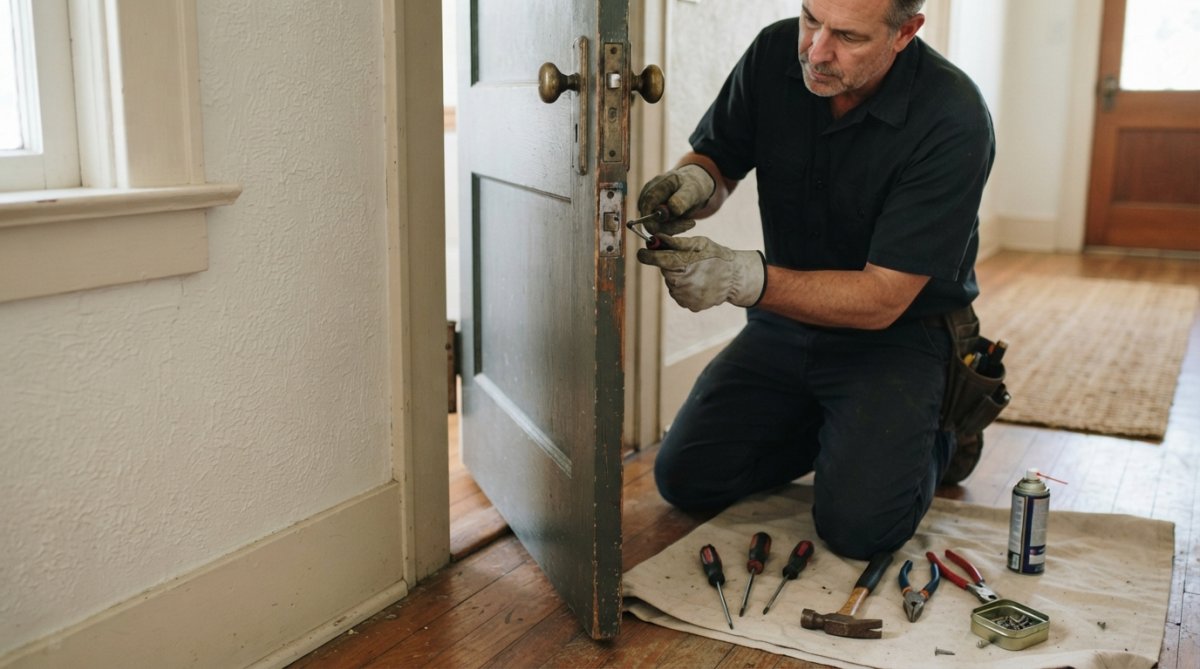
A residential lock maintenance checklist prevents the slow mechanical failures that cause lockouts at the worst possible time. Run through this every six months:
Spray graphite or a dry lubricant into each lock cylinder
Test every deadbolt by hand, checking for stiffness or grinding
Tighten all door hardware screws, including hinges and strike plates
Inspect key fobs and keypad buttons for wear
Confirm all spare keys are accounted for
Check that the door itself closes squarely in the frame
Test the mechanical override on any smart lock
Emergency Locksmith Services Cost and What to Expect
What you should expect from any reputable provider:
A free estimate before work begins, given on the phone and confirmed on-site
No hidden fees added once the technician arrives
Verifiable licensing and insurance you can check before letting anyone in
A clear explanation of what the work involves
Watch Out The most common lockout scam is a low phone quote that triples on arrival. Always ask for the total price in writing before authorizing work, and verify the license number independently.
Magnifico Locksmith has offered free estimates on-site and on the phone since 1997, and our team is licensed, bonded, and insured. You can verify credentials before we arrive.
Building Daily Habits for Key Awareness
Key awareness is a habit, not a personality trait. The psychology of habit formation is straightforward: attach the new behavior to something you already do without thinking.
Practical anchors that work:
One home for keys, always. A hook by the door, never a pocket or purse.
The pocket pat. Keys, phone, wallet, every time you stand up to leave.
Never leave a key in the lock. Even briefly, even inside.
Announce the spare key's location to one trusted contact, in writing.
Cost-Benefit Analysis of Lockout Prevention
The cost-benefit analysis of lockout prevention favors prevention every time, but the numbers are what make the case. Most articles stop at "prevention is cheaper" without showing the math. Here is the math.
What an emergency lockout actually costs
Service call fee: a flat dispatch charge, often higher after business hours
Labor: billed per hour or as a flat rate for standard entry
Parts and drilling: if the lock must be drilled, you also pay for a replacement cylinder or deadbolt plus installation
What prevention actually costs
Prevention Method | Typical Upfront Cost | Ongoing Cost | Lockout Risk |
Spare key with trusted contact | A few dollars for a duplicate | None | Low |
Secure lockbox | Modest one-time purchase | None | Low |
Smart lock with keypad | Mid-range hardware cost | Battery replacement every 6-9 months | Very low |
Biometric access | Higher hardware cost | Battery or power | Very low |
Routine maintenance | Low, often DIY | Occasional lubricant and parts | Low |
No backup plan | None | Full emergency call-out | High |
The break-even point
The hidden costs nobody prices in
Damaged hardware. Emergency entry often means drilling. That turns a lockout into a lock replacement.
Lost time. Waiting for a technician at 11 p.m. is not free, even if the invoice is small.
Security exposure. A drilled or bypassed lock leaves your home less secure until it is replaced, which is a second expense on top of the first.
A realistic budget for prevention
Pro Tip If you are deciding between a lockbox and a smart lock, start with the lockbox. It solves the most common lockout scenario for the lowest upfront cost, and you can upgrade to keyless entry later without wasting the investment.
Conclusion
Lockouts are rarely bad luck. They're the predictable result of a missing backup plan, a neglected lock cylinder, or a key with no fixed home. Fix those three things and you eliminate most of the risk.
Frequently Asked Questions
What are the most effective ways to prevent a home lockout?
The most effective strategies combine technology and habits. Install a smart lock or keypad entry system so you never need a physical key. Keep a spare key with a trusted neighbor rather than under a mat. Set a daily routine of checking for your keys before leaving. Schedule annual lock maintenance to catch mechanical failure early. These steps reduce your risk of a residential lockout significantly.
Should I keep a spare key hidden outside my home?
Hiding a key under a doormat, rock, or flowerpot is risky because thieves know these spots. A better option is a secure lockbox with a combination code, mounted in a discreet location. Give the code only to a trusted contact. Alternatively, leave a spare with a neighbor you trust. If you use a lockbox, change the code periodically and check the box for tampering.
How can smart locks help prevent residential lockouts?
Smart locks let you unlock your door with a phone, keypad, or biometric access, so you never face a lockout from lost keys. Many models send alerts if the door is left unlocked. Remote access lets you let in a guest or contractor without sharing a key. Just plan for battery failure by keeping a physical key in a secure place and replacing batteries on schedule.
How often should I have my residential locks inspected by a professional?
Schedule a professional inspection once a year, or every six months if your locks get heavy use. A locksmith will check the lock cylinder, deadbolt alignment, and door hardware for wear. They can spot a failing mechanism before it leaves you locked out. Regular lock maintenance also keeps your home security hardware working properly and extends its lifespan.
CALL US NOW
Comments